We earn commissions from brands listed on this site, which influences how listings are presented

Agile Project Management Software: Features, Benefits, and Top Tools

A verified, data-driven guide to choosing the right CRM — based on 2025 benchmarks and real ROI insights.

Data-Driven Insights

Based on benchmark tests from Tech Verifiers Labs 2025

Expert-Verified

Reviewed by independent CRM specialists

Real ROI Data

Evaluated across 20+ SaaS platforms

Key Takeaways

New Guide: Compare 500+ SaaS tools with AI-powered recommendations. Learn more

What Is a CRM (and Why You Need One)

In this section

A clear definition of what a CRM is and its core purpose in a modern business.

Agile project management software helps teams plan, track, and deliver projects efficiently. It gives structure to fast‑moving projects and helps teams stay aligned as they adapt to change. It enables teams to manage work with flexibility, improve collaboration, and deliver better results faster.
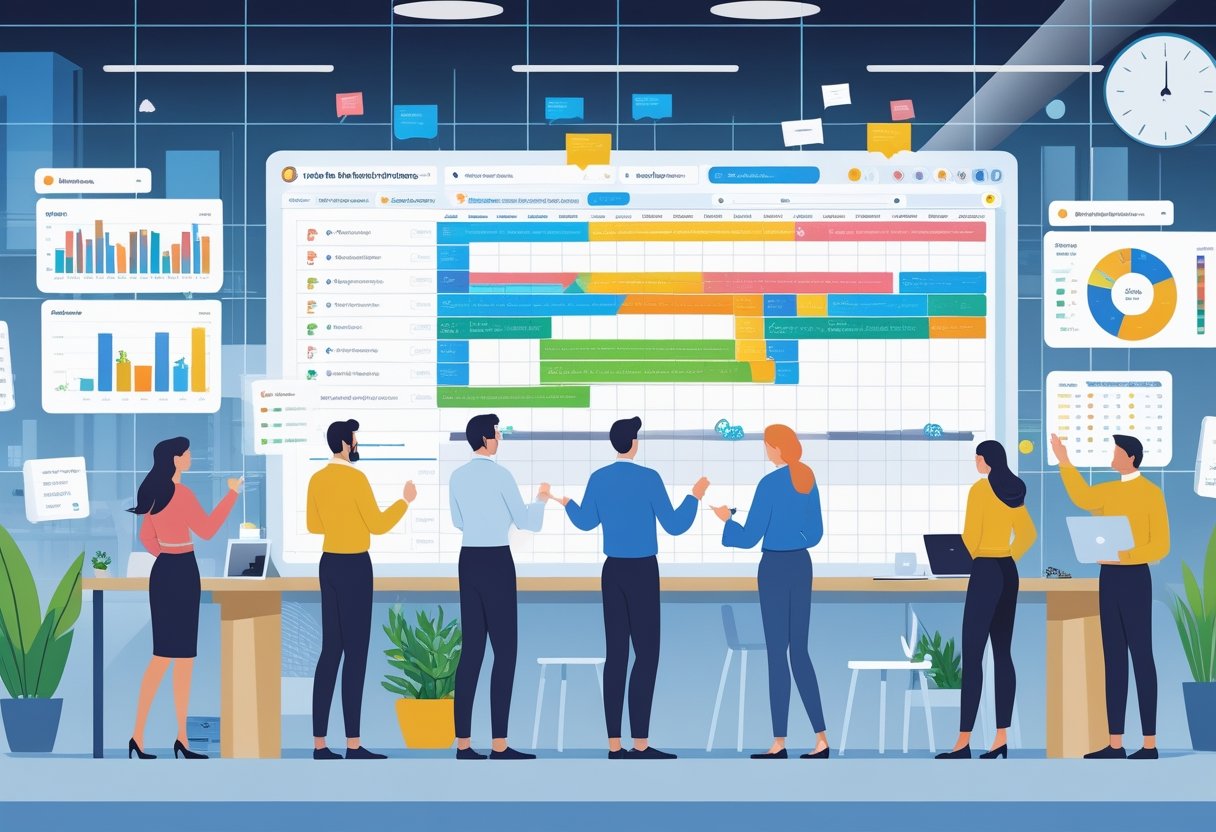
A team of professionals collaborating around a digital board showing task cards and progress charts in an office setting.

Choosing the right software influences how smoothly projects run. The best tools combine sprint planning, real‑time updates, and workflow automation to maintain momentum. Platforms like Jira and ProofHub make it easier to manage tasks, collaborate, and analyse progress in one place.

Each tool offers distinct features that support agile practices such as Scrum or Kanban. The right choice depends on team size, budget, and specific project goals. This guide helps identify which solution fits best for consistent and adaptable project management.

"A CRM isn't just software—it's the foundation of scalable customer relationships. Companies that implement CRMs see 41% more revenue per salesperson within the first year."

— Sarah Chen, VP of Sales Operations at TechScale Inc.

What Is Agile Project Management Software?

Agile project management software helps teams plan, track, and deliver work in flexible, short cycles. It supports collaboration, clear task visibility, and continuous improvement by adapting to change quickly. These tools help teams refine priorities, streamline workflows, and deliver value faster.

Core Principles of Agile

Agile project management software reflects four key principles: flexibility, collaboration, transparency, and continuous improvement. Teams organise work into short cycles called iterations or sprints, making it easier to adjust to feedback or new conditions.

A central part of agile is maintaining a steady rhythm of planning, execution, and review. Many tools include digital boards for tasks, backlogs, and progress tracking to keep everyone aligned. Transparency allows every member to see what others are working on, encouraging accountability.

Effective agile tools also prioritise customer satisfaction by including feedback mechanisms and review points. They enable users to make small, frequent updates instead of large, rigid releases. As explained by GeeksforGeeks, this iterative approach enhances adaptability and responsiveness to customer needs.

Key Agile Methodologies

Agile project management software often supports popular frameworks such as Scrum and Kanban. These methodologies provide structure while maintaining flexibility. Scrum uses sprint cycles, short planning periods that usually last two to four weeks, where teams commit to fixed goals. A Scrum board helps visualise progress from “to do” to “done”.

Kanban focuses on visual workflow management instead of fixed timeframes. Tasks move across columns that represent work stages, helping teams limit work in progress and avoid bottlenecks. Many teams combine Scrum and Kanban practices to create hybrid models that match their workflow needs.

Tools like Asana and Jira enable both frameworks, offering reporting dashboards, backlog management, and real-time collaboration. They enhance communication and provide measurable data that guide informed decisions during each iteration.

Iterative Development Explained

Iterative development is a process of repeating smaller cycles of planning, executing, and refining until a project is complete. Each iteration produces a working part of the final product, allowing teams to assess progress and make early improvements.

Agile project management software simplifies this by providing dashboards and metrics for each stage. Teams can track performance across iterations and use past insights to shape the next sprint. This reduces waste and helps maintain focus on business value.

As outlined by APM, iterative approaches improve team velocity and adaptability. By using feedback after every cycle, teams deliver more relevant results and respond quickly to changing priorities without losing quality.

Expert Insight:

A CRM transforms scattered data into a unified asset. This 'single source of truth' is the engine for personalized customer experiences and predictable growth.

Key Benefits for Small Companies

A well-chosen CRM helps small businesses work smarter. It improves customer retention, reduces lost leads, and supports more accurate sales forecasting. By automating repetitive tasks, it frees staff to focus on service and growth.

Key benefits include:

  • Better organisation of contact and sales data
  • Improved communication across teams
  • Faster response times for customer queries
  • Data-driven insights for smarter decisions

According to CRM.org, modern systems also offer built-in analytics and automation tools that help small companies compete effectively with larger firms.

The Hidden Costs of Poor CRM Management

Many small businesses underestimate how much poor CRM management can cost them. When customer data is scattered across spreadsheets, inboxes, and disconnected tools, teams waste valuable time and lose potential sales opportunities. Inefficient CRM practices- like outdated records, missing follow-ups, and inaccurate data – can quietly drain both time and revenue.


Data Verified by Tech Verifiers Labs · January 2025
Improvement in Customer Retention
0 %

Most businesses lose potential customers due to slow or inconsistent follow-ups.

Revenue Growth
% 0 ~
Average loss per company from poor data and CRM fragmentation.
CAC Decrease
0 %
Nearly half of reps spend more time entering data than actually selling.
Duplicate Records
0 %
Inaccurate databases create confusion, double effort, and frustrated clients.
See how leading teams fix these problems with the right tools.

Real Success Story

How TechStartup Doubled Revenue in 18 Months With The Right CRM

TechStartup, a 25-person SaaS startup, struggled with manual lead tracking and inconsistent follow-ups. After switching to an integrated CRM, their growth metrics skyrocketed.
We went from chaos to clarity in under three months. We went from chaos to clarity in under three months. We went from chaos to clarity in under three months.
Sarah Chen
VP Sales @ TechStartup
Revenue Growth
+ 0 %

in 18 months

Lead Response Time
- 0 %

faster follow-ups

Customer Retention
+ 0 %

higher loyalty

Team Productivity
0 %

more efficient

See how leading teams fix these problems with the right tools

Modern CRM dashboards provide real-time visibility into sales pipelines, customer interactions, and team performance metrics.

Essential Features for Agile Teams

In this section

The tangible outcomes that make CRMs indispensable for growing businesses.

Agile teams rely on efficient planning, clear visual workflows, and ongoing collaboration. Tools that support these areas help teams manage sprints, track progress, and stay aligned across every stage of a project.

Sprint Planning

Effective sprint planning turns high-level goals into achievable tasks. Teams define a sprint duration-usually two to four weeks-and select items from the backlog to complete. Using digital tools such as Atlassian’s Agile project management features, teams can set priorities, estimate effort, and track progress through velocity and burndown charts.

Sprint dashboards display each user story, its status, and who owns it. Automated updates move items through stages as they progress. This creates transparency across the team and helps identify issues early.

Many tools also offer built‑in checklists for managing sprint goals. These checklists ensure each item meets the definition of done before it closes. The result is consistent delivery and measurable improvement over time.

Kanban and Scrum Boards

Kanban boards give teams a visual way to manage tasks. Work items move across columns such as To DoIn Progress, and Done. Digital boards in tools like Monday.com’s Agile software or Taskroup’s platform help teams track progress without switching applications.

For teams using Scrum, boards show backlog items assigned to each sprint. This makes daily stand‑ups faster and more focused. Stakeholders can see progress at a glance and follow up on blockers immediately.

Most tools allow colour coding, filters, and custom columns. These adjustments support different workflows, whether the team follows pure Scrum, Kanban, or a hybrid method.

Board Type Purpose Key Benefit
Kanban Continuous workflow Tracks work in progress efficiently
Scrum Sprint‑based Organises tasks by sprint goals

Backlog and Prioritisation

A well-managed backlog gives teams a single view of all pending work. Each task, story, or bug sits in a list that can be re‑ordered as priorities shift. Good backlog management tools let users sort by importance, urgency, or business value.

Features like drag‑and‑drop prioritisation save time and reduce confusion. The tool should allow comments, attachments, and clear ownership for every item. According to TechnologyAdvice, this flexibility helps eliminate redundant processes while keeping projects aligned with changing needs.

Teams benefit when the backlog links directly to the sprint board. Selecting the next sprint becomes faster and more accurate, maintaining focus on the highest‑value work.

Real-Time Collaboration

Real‑time team collaboration supports faster decision‑making and helps distributed teams stay connected. Built‑in chat, mentions, and task comments reduce reliance on long email chains. Tools such as ONES Project’s Agile comparison guide highlight the importance of integrating messages, files, and updates into one shared space.

Collaborators see changes instantly. When a user updates a task or moves a card on the board, everyone gains visibility. This avoids duplicate work and allows teams to respond quickly to issues.

Strong collaboration tools also offer video integration and shared editing options. Keeping communication within the system maintains a single source of truth for all project information, improving consistency and accountability.

Predictable Pipeline & Forecasts
Track deals through defined stages and build forecasts your team can trust.

29% increase in sales revenue

34% shorter sales cycles

Automation of Repetitive Work
Automate routine tasks, freeing up hours for relationship building and closing deals.

2.5 hours saved daily per rep

67% less time on admin tasks

Seamless Team Handoffs
Everyone sees the same customer history, creating smooth professional experiences.

25% customer satisfaction increase

60% fewer escalations

Improved Customer Retention
Track customer health and prompt timely check-ins to reduce churn proactively.

27% customer retention increase

$180K average LTV increase

ROI Multiplier:

While CRMs are often bought for sales, their true value is unlocked when marketing and customer service use the same data. This creates a seamless customer journey that boosts lifetime value.

Data Fragmentation: Customer information scattered across multiple platforms creates gaps in understanding. Sales might not know about recent support issues, while customer service lacks visibility into ongoing deals.

Missed Opportunities: When follow-ups are forgotten or leads fall through cracks, businesses lose revenue. Studies show that companies with organized customer data see higher revenue per sales rep.

Inconsistent Customer Experience: Without centralized information, customers often repeat their stories, eroding trust and satisfaction.

Top Agile Project Management Software Solutions

In this section

A step-by-step guide to selecting the perfect CRM for your specific business needs, ensuring you invest in a tool that grows with you.

Each agile platform offers unique tools for sprint planning, team collaboration, and progress tracking. The most useful systems include options for integration, reporting, and custom workflows that fit the structure and needs of modern teams.

Jira and Atlassian Suite

Jira, part of the Atlassian suite, stands out as one of the most widely used platforms for software development teams. It supports Scrum, Kanban, and hybrid workflows, allowing teams to manage backlog items, user stories, and issue tracking in one place.

The system integrates seamlessly with Confluence for documentation and Bitbucket for version control, creating a connected environment for continuous delivery. Teams can also extend its capabilities through the Atlassian Marketplace, which offers a broad range of plugins and automation tools.

Jira’s reporting features include burndown charts, velocity tracking, and sprint reviews. These reports help managers monitor progress and identify potential bottlenecks. Larger organisations often use Jira Software in combination with Jira Service Management to coordinate development and support tasks across departments.

More details about agile tools offered by Atlassian can be found in this list of top agile project management software solutions.

Trello

Trello uses a simple card-and-board system to manage projects. Each board represents a project or workflow, with lists showing stages like To DoDoing, and Done. Individual cards can track tasks, due dates, attachments, and comments, allowing for flexible collaboration.

Trello is popular among smaller teams or non-technical users because it is easy to set up and requires little training. The visual layout encourages quick updates and progress tracking at a glance. Users can automate repetitive actions through Butler, Trello’s built-in automation tool.

Integrations with SlackGitLab, and Jira extend Trello’s reach into software and operational workflows. Although it lacks some of Jira’s advanced reporting, it remains effective for planning content, events, and agile retrospectives. Teams comparing options can explore these agile project management tools for more insights.

Asana

Asana focuses on clarity and team alignment through a mix of task lists, boards, and timelines. Teams can break work into smaller milestones and assign subtasks with individual due dates. The interface supports both Kanban-style boards and list views, appealing to users who prefer different organisational methods.

A strength of Asana is its cross-functional use. Marketing, product, and development teams can collaborate within one space. The tool also connects with Microsoft TeamsSlack, and Google Workspace, keeping communication within familiar channels.

Asana’s reporting dashboards give a quick overview of project health and task completion. Automation rules reduce manual updates, and templates make repetitive project planning faster. Platforms like Monday.com and Wrike provide similar flexibility, as seen in this review of leading agile project management software.

ClickUp

ClickUp brings together tasks, documents, and goals into a single workspace. It allows users to manage sprints using boards or lists, making it adaptable to Scrum and Kanban teams. The tool provides built-in docs similar to Confluence, which helps teams centralise notes and sprint plans.

ClickUp supports custom fieldsautomations, and dashboards that track priorities and workloads. Its analytics tools highlight task progress and allocation, which helps ensure balanced workloads and timely delivery. The hierarchy of spaces, folders, and lists allows teams to organise work at scale.

It integrates with GitHubAzure Boards, and Zoho Sprints, strengthening its usefulness in both software and mixed-department teams. For a wider comparison of agile platforms like ClickUp, see this comprehensive guide to agile management software.

4. Research and Shortlist Vendors: Use comparison sites (like ours!) and reviews to identify 3-5 potential CRM providers that align with your needs and budget. Pay attention to vendors specializing in your industry or business size (e.g., SMBs, enterprise).

5. Run In-Depth Demos and Trials: Never buy a CRM without seeing it in action. Schedule live demos with your top 3 vendors. Involve key team members who will use the software daily. Use a free trial to test your specific workflows and assess ease of use. Does it feel intuitive? Can your team see themselves using it every day? This is the most critical step.

Pro Tip:

The free trial is your most important evaluation tool. Use it to test your actual daily workflows, not just the vendor's canned demo.

Top 3 CRM Tools Compared

Rated by our Expert Panel

9.2 /5

Based on 2,400 reviews

25k+

Trusted readers

HubSpot CRM

9.2 /10

Ease of Use
96%
Integrations
98%
Pricing
85%
Support
95%
Features
97%
Scalability
93%

Verified data from Tech Verifiers Expert Panel

Monday CRM

9.1 /10

Ease of Use
98%
Integrations
92%
Pricing
94%
Support
89%
Features
90%
Scalability
88%

Verified data from Tech Verifiers Expert Panel

Pipedrive

9 /10

Ease of Use
95%
Integrations
88%
Pricing
90%
Support
92%
Features
87%
Scalability
89%

Verified data from Tech Verifiers Expert Panel

Complete CRM Comparison Matrix

Verified by Expert Panel

2025 BENCHMARK

Updated Oct 2025

1,200+ DATA POINTS

25 vendors analyzed

LABS AUDITED

Independent review

Compare
HubSpot

HubSpot

9.4
Monday

Monday

9.1
Pipedrive

Pipedrive

9
Starting Price
£16/moper month
£9/mo per month
£12/mo per month
Ease of Use
9.6/10
9.8/10
9.5/10
Integrations
1,000+ 600+ 400+
Key Features
Automation
CRM + CMS
AI Insights
Boards
Automations
Workflows
Pipeline
Deals
Reports
Support
24/7 Chat & Email 24/7 Chat Email & Chat
Security
GDPR
SSL
SSO
GDPR
SSL
GDPR
SSL
Free Trial
14 days 14 days 14 days
Free Plan
Ideal For
All-in-one teams
Visual Sales
Sales Teams
Get Started

Monday CRM

Automation & Sales Management Platform

9.2/10 (2,400 reviews)

Verified by 3 Tech Verifiers Experts

Last audit: October 2025

14-Day Free Trial

No Credit Card Needed

Customisation and Workflow Automation

In this section

From data migration to team training, here's how to ensure a smooth CRM rollout and achieve rapid user adoption.

Teams adapt Agile project management tools to match their unique processes by creating custom workflows, automating routine actions, and linking multiple apps for better coordination. These features help reduce manual work, improve visibility, and increase consistency across projects.

Customisable Workflows

Customisable workflows let teams define steps that mirror how their projects actually move from start to finish. Rather than using fixed templates, project managers can adjust stages, permissions, and transitions to match internal processes. Tools such as Jira and ProofHub allow custom fields, dynamic boards, and status rules to fit various Agile frameworks, including Scrum or Kanban.

Teams can also create conditional logic within these workflows. For example:

StageTriggerAutomatic Action
In ReviewAll tasks reviewedNotify product owner
ApprovedApproval addedMove to “Ready for Release”

Such flexibility ensures every team member follows a clear, traceable path of progress, reducing confusion and delays.

Workflow Automation Tools

Automation helps teams remove repetitive work and maintain consistent outcomes. Modern project management platforms, including Atlassian’s workflow automation software, simplify everyday actions using predefined rules. For instance, when a task’s status changes, automation can alert stakeholders or trigger dependent tasks.

Butler automation in tools like Trello allows users to build “if-this-then-that” commands-such as automatically assigning labels or moving cards when deadlines change. Similarly, automation features in systems like pipelines streamline release processes by connecting code updates to deployment environments.

Common uses include:

  • Assigning tasks based on role or priority.
  • Sending reminders when deadlines approach.
  • Generating reports after sprint completion.

Automation supports error reduction and ensures projects move continuously without manual oversight.

Integration Capabilities

Integration improves how Agile teams connect their software environment. Most leading platforms, including those reviewed in Knack’s agile project management tools list, connect with communication, documentation, and development apps. This makes updates available in real time and reduces switching between systems.

Common integration examples include:

  • Connecting Git repositories for automated updates in task boards.
  • Using Power-Ups to add video calls, time tracking, or analytics.
  • Linking pipelines to launch builds automatically after code commits.

Effective integration centralises project information, allowing teams to collaborate efficiently and maintain visibility across workflows. It ensures every tool contributes to a single, cohesive system of work.

Success Principle:

The "Crawl, Walk, Run" approach prevents overwhelming your team and increases long-term adoption by focusing on value from day one.

4. Invest in Comprehensive Training: Proper training is non-negotiable. It should be tailored to different roles (sales reps, managers, admins). Combine formal training sessions with on-demand resources like video tutorials and documentation.

5. Focus on User Adoption: The best CRM is the one your team actually uses. Make it easy to use, integrate it with their existing tools (like email), and clearly communicate the “what’s in it for me” for each team member. Lead by example—if managers use the CRM daily, the team will follow.

Collaboration, Reporting and Analytics

In this section

From data migration to team training, here's how to ensure a smooth CRM rollout and achieve rapid user adoption.

Effective agile project management software supports clear team communication, transparent project tracking, and actionable analytics. These tools focus on fostering teamwork, providing data-driven insights, and improving visibility into progress and workloads.

Collaboration Features

Modern agile software strengthens teamwork by centralising communication and simplifying task coordination. Platforms often include real-time chat, discussion threads, and @mentions to keep members connected, reducing the need for external messaging apps. Tools with shared digital boards and Kanban or Scrum views allow teams to visualise workflow and manage tasks efficiently, aligning efforts across departments.

Platforms such as SwitchOnBusiness’s collaborative project management software enable live updates, shared boards, and feedback loops between teams and managers. These features help distributed teams stay aligned and maintain transparency in decision-making.

Integrations with other work tools, such as document sharing and version control systems, support coherent collaboration. Notifications and synchronised comments ensure quick feedback and fewer communication delays. By combining all communication channels, agile teams can reduce bottlenecks and keep workflows moving smoothly.

Agile Reporting and Analytics

Reliable reporting tools turn daily activity into useful insights. Agile metrics-such as velocity trackingburndown charts, and progress tracking-allow managers to measure sprint performance and forecast workloads with accuracy. Data visualisations show trends in backlog changes and workload distribution, helping teams identify inefficiencies early.

Many platforms, including those reviewed in The Digital Project Manager’s guide to collaboration tools, now include advanced dashboards that track key metrics in real time. Reports often feature filters for task type, assignee, and sprint, giving granular visibility into performance.

These analytics enable data-driven decisions by highlighting progress against milestones and team capacity. Frequent reporting also helps in adapting sprint goals, improving estimation accuracy, and enhancing accountability throughout the project lifecycle.

Advanced Visual Project Management

Advanced visual tools make it easier to understand complex workflows. Software that incorporates Gantt chartsburndown charts, and detailed velocity charts supports both strategic planning and day-to-day monitoring. These visuals give managers a clear timeline view of sprint phases, dependencies, and delivery forecasts.

Solutions like Targetprocess offer robust visual management for large-scale agile projects. By displaying multiple teams’ progress in one interface, they simplify portfolio management and capacity planning.

Visual dashboards reveal timeline overlaps, potential delays, and workload imbalances. They improve stakeholder communication by presenting information in an accessible, structured format. Interactive reports, filters, and colour coding help individuals quickly view priorities and ensure that tasks match overall project goals.

Success Principle:

The "Crawl, Walk, Run" approach prevents overwhelming your team and increases long-term adoption by focusing on value from day one.

4. Invest in Comprehensive Training: Proper training is non-negotiable. It should be tailored to different roles (sales reps, managers, admins). Combine formal training sessions with on-demand resources like video tutorials and documentation.

5. Focus on User Adoption: The best CRM is the one your team actually uses. Make it easy to use, integrate it with their existing tools (like email), and clearly communicate the “what’s in it for me” for each team member. Lead by example—if managers use the CRM daily, the team will follow.

Selecting the Best Agile Tool for Your Organisation

In this section

From data migration to team training, here's how to ensure a smooth CRM rollout and achieve rapid user adoption.

Choosing the right Agile project management software depends on team size, industry needs, and how well the platform scales with company growth. The ideal tool should provide flexible resource planning, effective collaboration, and responsive customer support to maintain long-term value.

Enterprise vs Small Business Needs

Enterprises demand scalable tools that integrate with complex systems such as customer relationship management and enterprise resource planning. They also need strong reporting, role-based permissions, and advanced capacity planning. Platforms like Atlassian’s top Agile tools offer comprehensive dashboards suitable for large, distributed teams.

Small businesses and startups often prioritise ease of use and cost efficiency. Tools such as Wrike’s Agile platforms and monday.com provide lightweight interfaces and affordable plans that support quick deployment. These solutions help teams adopt Agile workflows without requiring extensive training or IT resources.

Enterprises tend to invest in dedicated training and professional services, while small businesses rely more on online knowledge bases and community forums. A simple comparison can help illustrate the difference:

Organisation Type Key Priorities Tool Features
Enterprise Scalability, integration, compliance Advanced analytics, role-based access
Small Business Simplicity, cost, collaboration Easy setup, flexible boards, templates

Industry-Specific Use Cases

Different industries apply Agile practices in varied ways. Software development teams benefit from sprint tracking, backlog prioritisation, and built-in code integrations. Tools reviewed by The Digital Project Manager highlight those suited to iterative delivery and frequent updates.

In professional services such as consulting or marketing, resource management and time tracking are crucial. Platforms offering visual workload overviews allow managers to balance team utilisation effectively across projects.

Manufacturing and R&D organisations need Agile tools with strong documentation management and cross-department visibility. This enables better coordination between engineering, design, and testing teams. Selecting a platform that supports customised workflows helps maintain consistent methods across varied departments.

Evaluating Scalability and Support

Scalability ensures that project management software continues to perform as teams expand. An organisation should examine user limits, data capacity, and integration support before selecting a platform. Tools listed in SmartSuite’s Agile software overview outline configurations suitable for both small teams and global enterprises.

Customer support is another major factor. Enterprise customers often expect dedicated account management, 24/7 assistance, and onboarding programmes. Small teams may prefer vendors providing accessible live chat and active user communities for fast guidance.

Training options-ranging from built-in tutorials to professional certification programmes-affect adoption rates and efficiency. The best tools combine responsive customer support, structured training, and thriving user communities to ensure teams can adapt as business demands evolve.

Success Principle:

The "Crawl, Walk, Run" approach prevents overwhelming your team and increases long-term adoption by focusing on value from day one.

4. Invest in Comprehensive Training: Proper training is non-negotiable. It should be tailored to different roles (sales reps, managers, admins). Combine formal training sessions with on-demand resources like video tutorials and documentation.

5. Focus on User Adoption: The best CRM is the one your team actually uses. Make it easy to use, integrate it with their existing tools (like email), and clearly communicate the “what’s in it for me” for each team member. Lead by example—if managers use the CRM daily, the team will follow.

Selecting the Right Software for Your Team

In this section

From data migration to team training, here's how to ensure a smooth CRM rollout and achieve rapid user adoption.

Selecting project management software requires balancing team size, technical needs, and future demands. The right tool supports everyday tasks while also preparing a team for expansion, integration with existing systems, and different work structures such as client projects or remote collaboration.

Scalability and Future Growth

Small teams often start with light, flexible tools but later need to handle more projects, users, and data. Scalability ensures the software can grow without disrupting existing workflows. A platform like Wrike or Monday.com offers modular upgrades, allowing small teams to add advanced features as they expand.

Key scalability features include:

  • Adjustable user limits
  • Flexible storage capacity
  • Role and permission management
  • Cross-team collaboration options

Lifecycle planning is essential. Teams should check whether the provider offers tiered pricing or enterprise options before committing long term. This prevents the cost or migration effort of moving to another system later.

Customisation and Integrations

Customisation helps adapt the software to fit unique workflows, while integrations allow it to connect with other everyday tools. Platforms like Asana and Airtable enable teams to adjust task layouts, automate updates, and link to apps such as Google Drive or Slack.

Teams benefit most when they combine built‑in templates with custom automation or reports. A balance between simplicity and custom features supports productivity without overcomplicating daily use.

Example configuration table:

Feature TypeBenefitExample Tool
Task TemplatesFaster setupAsana
API IntegrationsConnects with CRM or chat toolsAirtable
AutomationsReduces manual stepsNotion

A well‑integrated system removes duplication and keeps data consistent across tools.

Success Principle:

The "Crawl, Walk, Run" approach prevents overwhelming your team and increases long-term adoption by focusing on value from day one.

4. Invest in Comprehensive Training: Proper training is non-negotiable. It should be tailored to different roles (sales reps, managers, admins). Combine formal training sessions with on-demand resources like video tutorials and documentation.

5. Focus on User Adoption: The best CRM is the one your team actually uses. Make it easy to use, integrate it with their existing tools (like email), and clearly communicate the “what’s in it for me” for each team member. Lead by example—if managers use the CRM daily, the team will follow.

FAQs

In this section

Quick answers to the most common CRM questions.

  What is agile project management software?

Agile project management software is a tool that helps teams plan, track, and deliver work in short, flexible cycles (sprints or iterations). It supports frameworks like Scrum and Kanban, giving visibility into tasks, backlogs, and progress so teams can adapt quickly to change and deliver value faster.

Key features include sprint planning, Scrum or Kanban boards, backlog management, real-time collaboration (chat, comments, @mentions), automation (rules and triggers), integrations with other tools (e.g., Git, Slack, CRM), and reporting/analytics like burndown charts, velocity tracking, and dashboards.

For larger enterprises, tools like Jira (with the wider Atlassian suite) work well thanks to advanced reporting, role-based permissions, and strong integration options. Smaller teams or non-technical users often prefer simpler platforms like Trello, Asana, Monday.com, or ClickUp because they’re easier to set up, more visual, and usually more affordable.

Start by clarifying your goals: team size, budget, preferred methodology (Scrum, Kanban, or hybrid), and integration needs (e.g., CRM, code repos, communication tools). Then compare tools on ease of use, customisation, automation, reporting, scalability, and support options. The best choice is the one that fits your current workflows while being flexible enough to grow with your organisation.

Top Project Management Companies

9.0

ClickUp

Focuses purely on pipeline management.

9.6

Monday.com

 a visual platform for managing all your team’s work in one place

9.7

Pipedrive

The enterprise standard for large, complex teams.

Explore More Expert-Verified Articles

Curated reads to deepen your understanding and compare tools side by side.

Top Website Builders for 2025 — Performance and Pricing

Real-world data on Shopify, Wix & Squarespace efficiency.

6.8k readers this month

How to Evaluate CRM Integrations Before Migrating

The key questions every team should ask before switching.

Expert verified

Project Management Tools: Features That Actually Matter

Beyond the hype — what features drive real productivity gains.

4.2k readers this month

HubSpot vs Salesforce: Which CRM Wins in 2025?

Side-by-side comparison with real user data and ROI analysis.

Editor's pick

The Hidden Costs of SaaS: What Vendors Don't Tell You

Uncover the real TCO with our expert framework.

8.1k readers this month

Building Your First Tech Stack: A Step-by-Step Guide

From zero to fully integrated — the practical playbook.

Beginner friendly

Get Data-Driven SaaS Insights That Actually Drive Growth

Join 50,000+ professionals reading weekly insights for smarter decisions.
Trusted by leaders at HubSpot, Notion & Pipedrive
You can unsubscribe anytime. We never share your data.
Best CRM Software Companies
Ultimate CRM Comparison Matrix
50+ CRM tools analyzed across 15 key criteria
Save 40+ hours of research with our comprehensive CRM comparison spreadsheet. Includes pricing, features, integrations, and expert scores.

Get Instant Access

Enter your email and we’ll send you the download link immediately.
Your email is 100% secure. No spam, ever. Unsubscribe with one click.
Trusted by professionals at: